
Walls Within Walls: The Split Arbitrage, Tracksuit Yachts, and Brutalist Utopias
Swapping Southeast Asian chaos for Adriatic comfort. An operator's breakdown of Split, Croatia: living inside a repurposed Roman fortress, navigating the tracksuit yacht mafia, and tapping into a heavily multilingual, Brutalist engineering hub where the lifestyle is a quiet, profound luxury.
After almost two years of bouncing through the chaotic grit of Southeast Asia and the off-grid jungles of the Pacific, the system needed a reset. I needed European coastal comfort, reliable power grids, and a timezone that didn't require a 2 AM wake-up call to reach the US East Coast.
I looked at the map, skipped the overpriced Western European hubs, and pointed it at the Balkans. I landed in Split, Croatia.
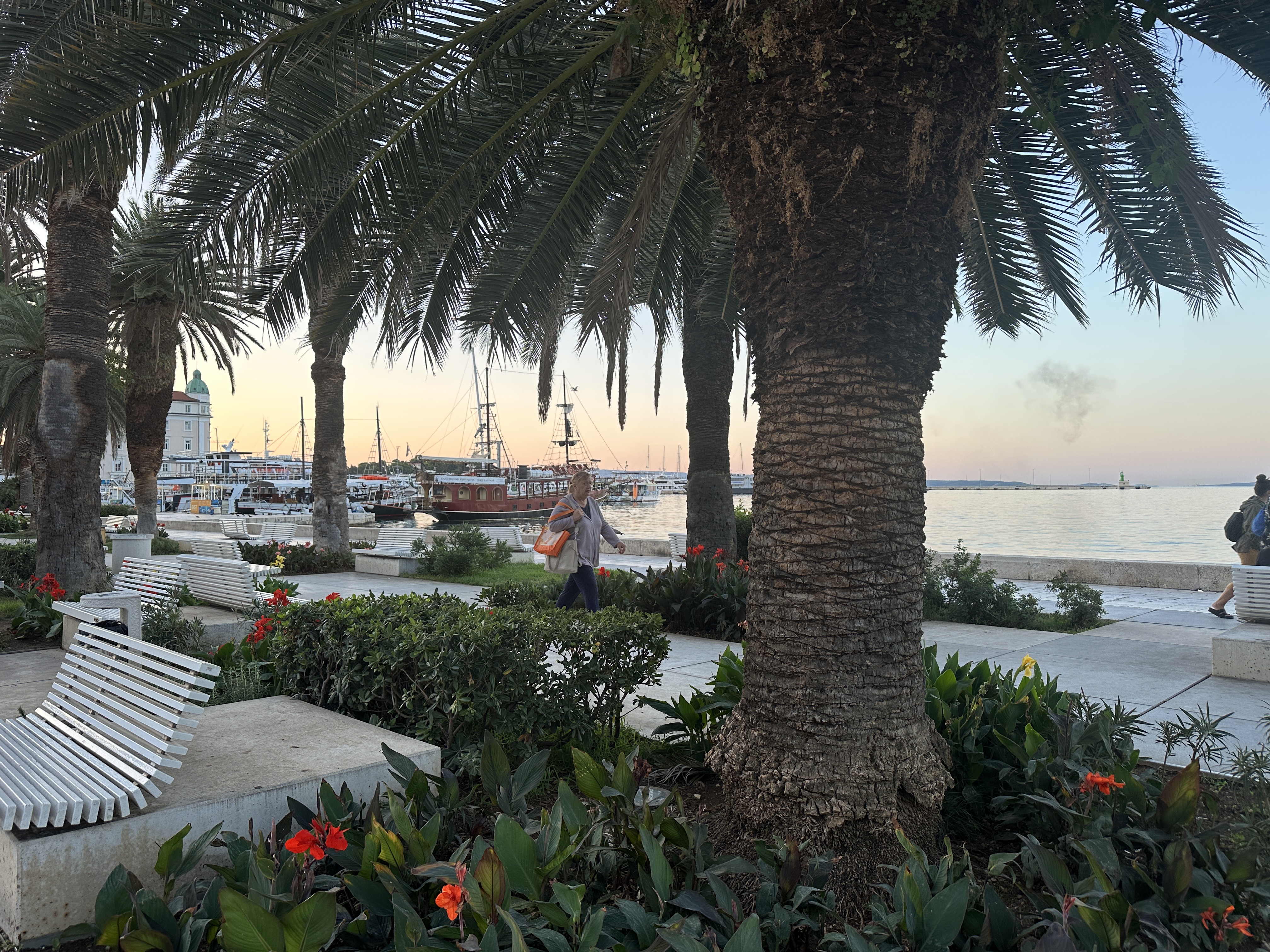
I set up a base right next to the water, a stone's throw from the ancient walls. Split operates as a massive, open-minded port city. It gives you that pristine Mediterranean beach vibe, but it is anchored by a heavy, complex history and a deep, unexpected engineering culture.
Here is the unvarnished field report on the gateway to Eastern Europe.
The Fort Within a Fort (And The Italian Bleed)
You don't just visit the history in Split; you drink coffee on top of it.
To understand why the city's infrastructure is so aggressively layered—literally walls built inside of other walls—you have to look at the timeline. Back in the 4th century, the Roman Emperor Diocletian built a massive, heavily fortified retirement complex right on the water. It was a military-grade palace.
But a few centuries later, the nearby Roman capital of Salona was sacked by invading Avars and Slavs. The surviving refugees fled to Diocletian's abandoned palace and squatted in the Emperor's halls. Over generations, they built houses between the columns. The palace didn't just house the city; the palace became the city.
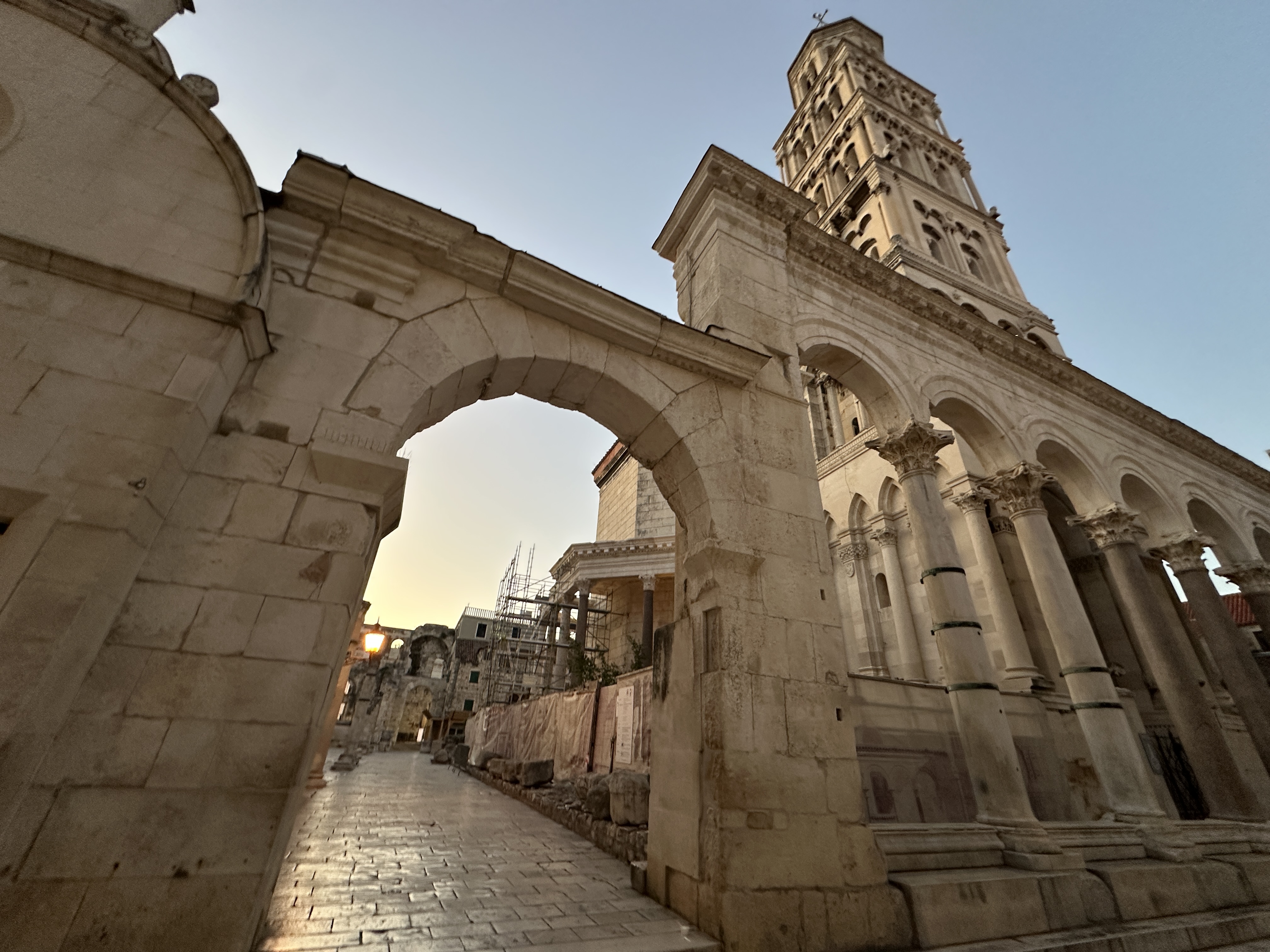
Then, in the 15th century, the Venetians took control of Dalmatia. As the Ottoman Empire expanded westward, the Venetians realized the Roman walls weren't enough. So they built a new set of massive, star-shaped defensive walls entirely around the old Roman walls.
This created a literal "city within a city." Today, you have Roman columns holding up Venetian Gothic windows, which house modern cafes and apartments.
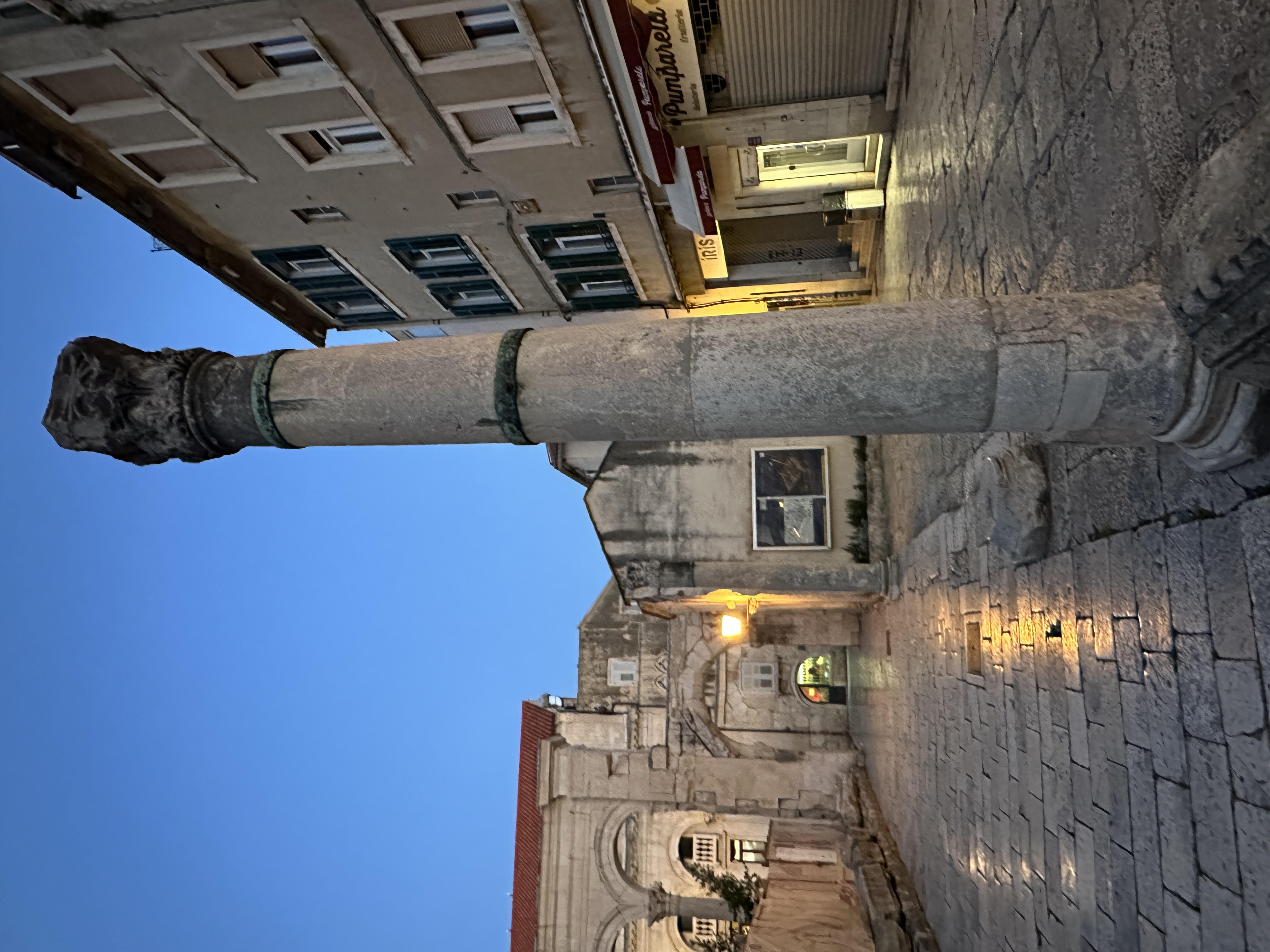
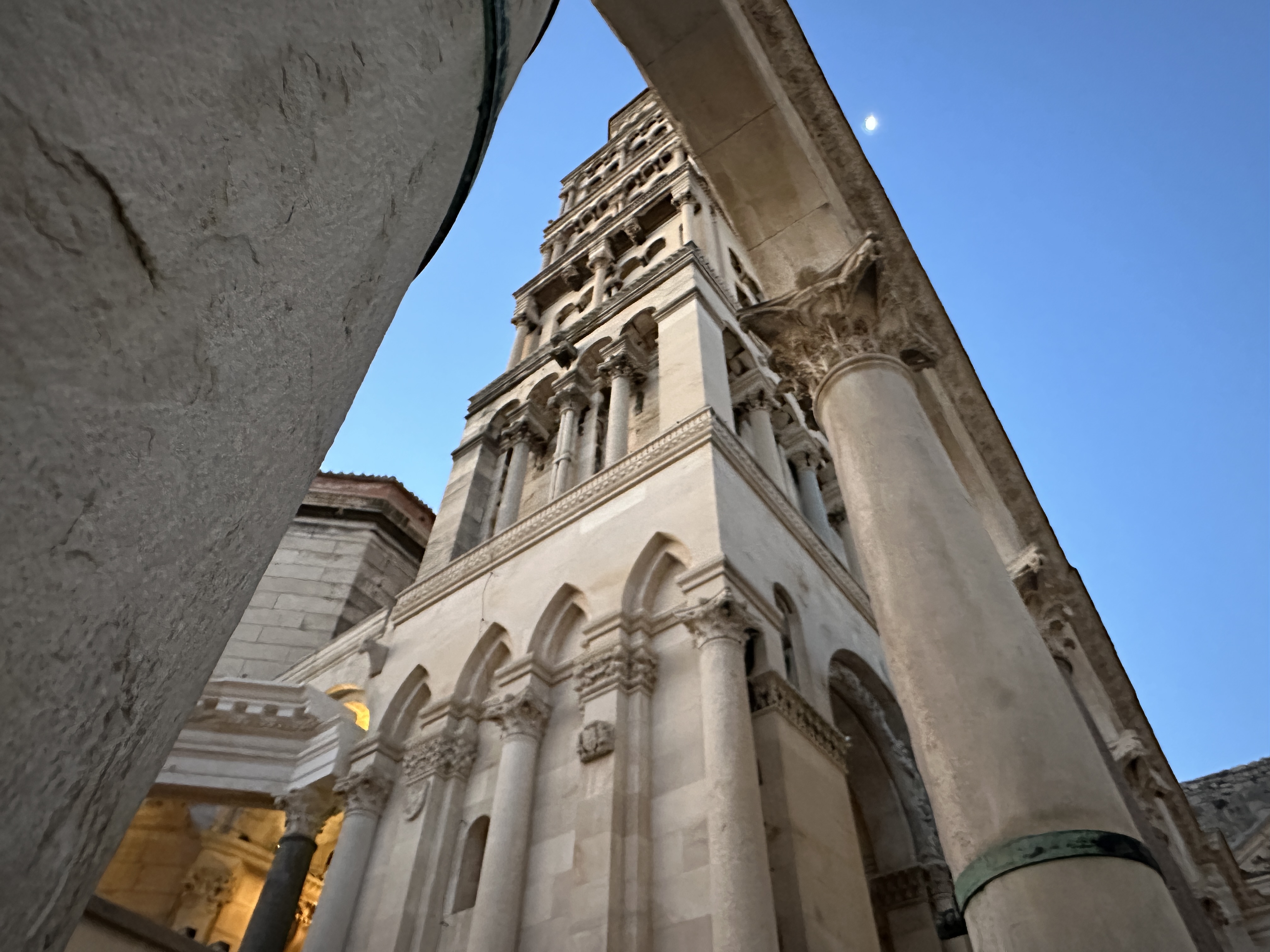
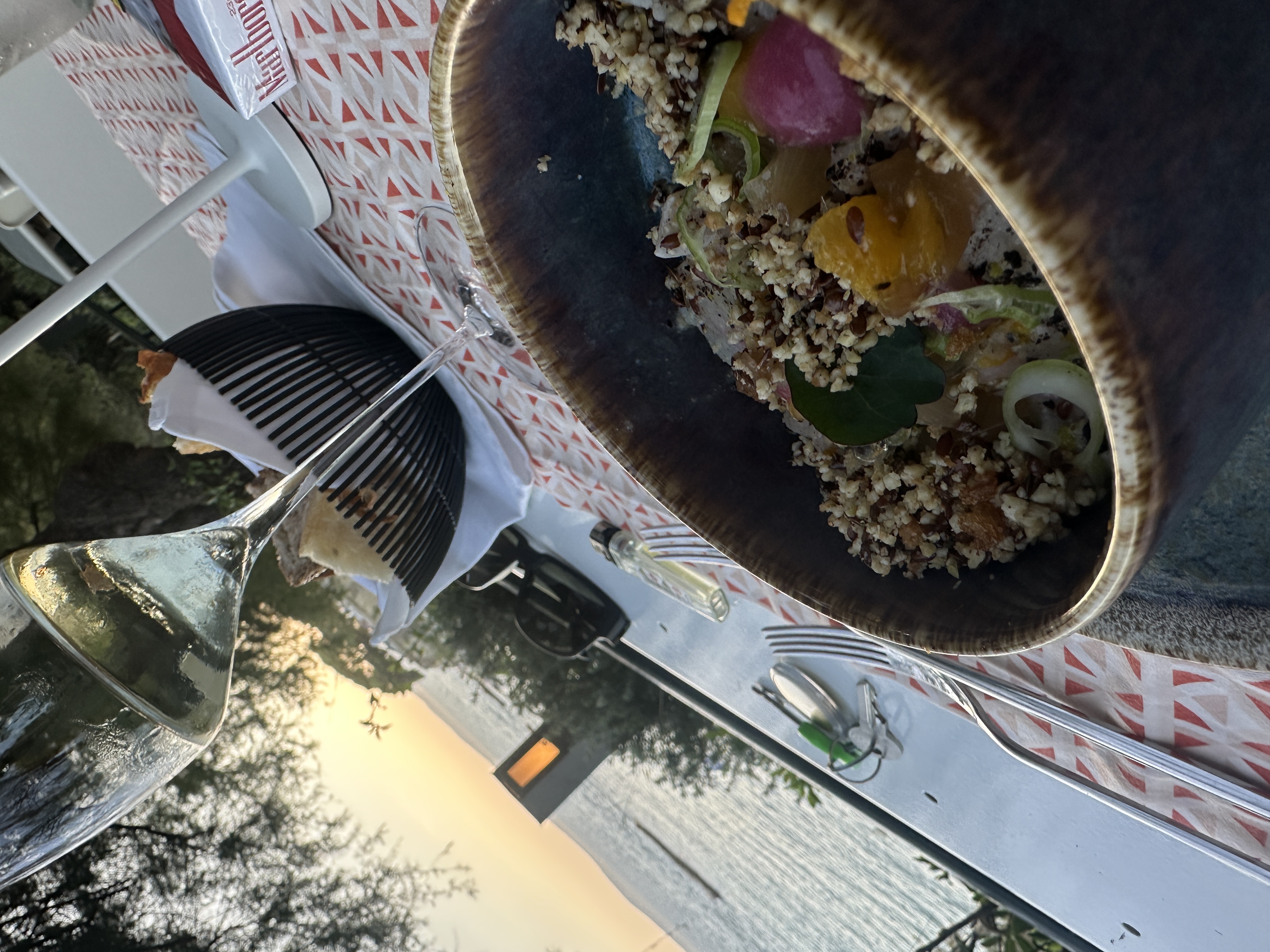
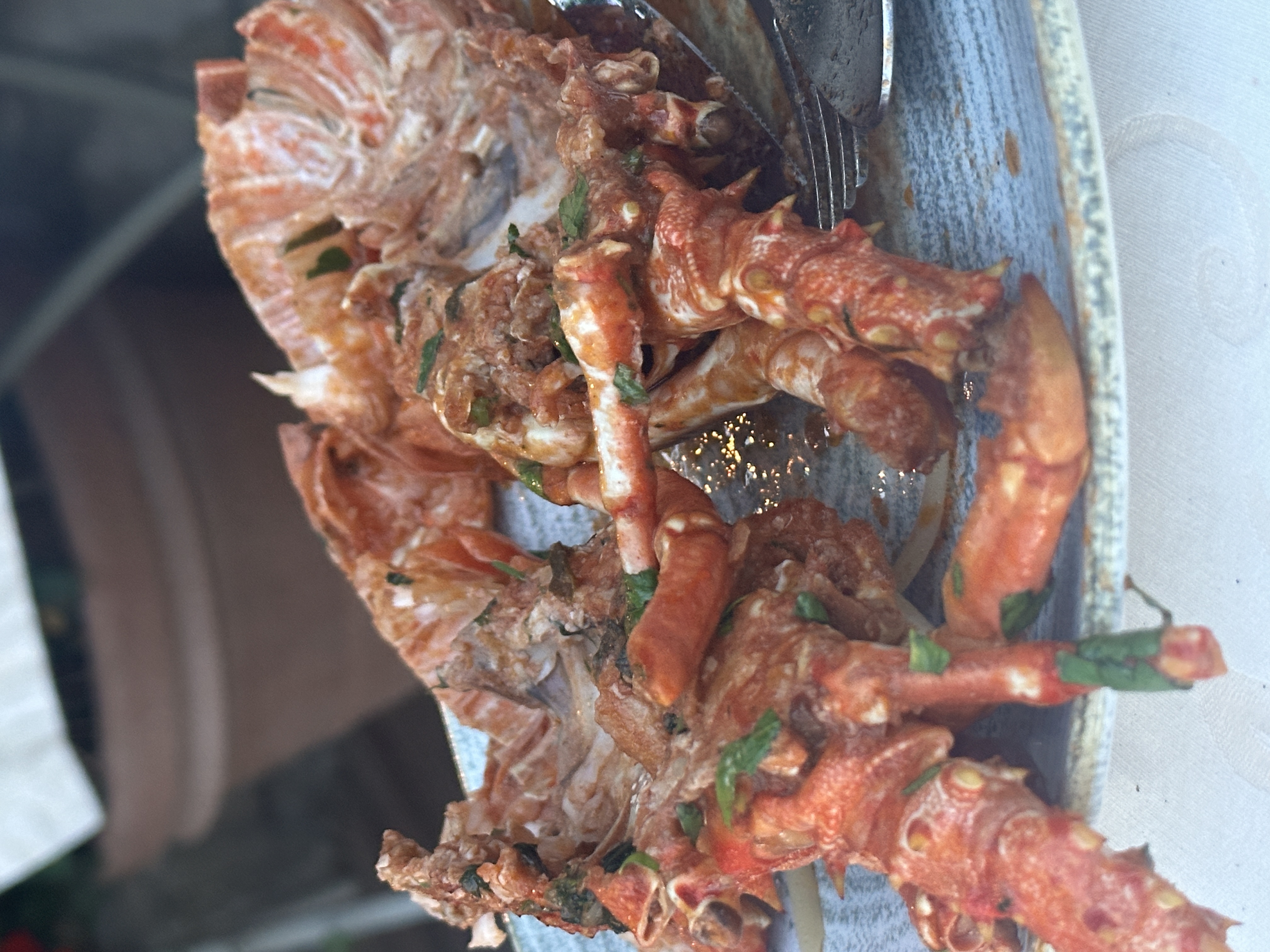
Because you are looking directly west across the Adriatic Sea to Italy, the cultural and culinary bleed from that Venetian rule is massive. The food here isn't just heavy Balkan meat; it’s a high-end hybrid. You are eating world-class crni rižot (black squid ink risotto), cured pršut (prosciutto), and local olive oils that rival anything in Tuscany, for half the price.
Tracksuits, Yachts, and the EDM Engine
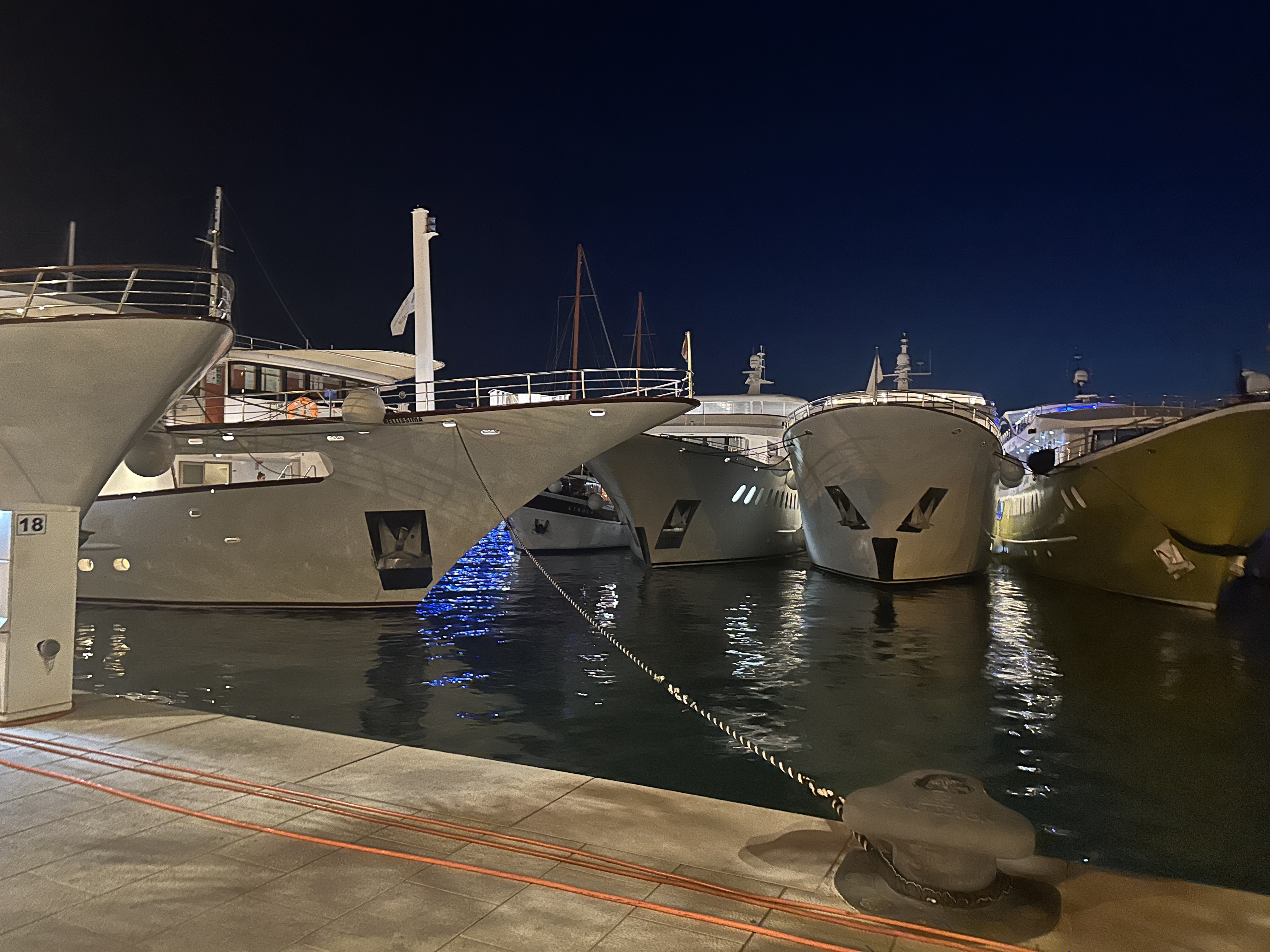
The ancient architecture is a stark contrast to the modern port culture. Split is one of the primary naval and civilian gateways into Eastern Europe, and the money flowing through the harbor is wild.
You have an entire subculture of European "mafia" yacht money. I’m talking massive, multi-million dollar boats staffed by guys covered in face and hand tattoos, wearing heavy silver chains and matching tracksuits. It’s an aggressive aesthetic, but the city’s vibe is surprisingly relaxed and liberal. It’s a true port city—everyone is passing through, and nobody really cares what you are doing as long as you pay your tab.
That transient, high-energy port money fuels an explosive EDM scene.
Split is not a quiet historical retreat. In the summer, it hosts Ultra Europe, pulling hundreds of thousands of people into the massive Poljud Stadium. But even outside of festival season, the club infrastructure is top-tier. You have massive venues pushing heavy house and techno until sunrise. The city is a machine that runs on history by day and bass by night.
Brutalist Utopias and the Engineering DNA
If you walk 15 minutes away from the Roman core, the aesthetic violently shifts. You hit the remnants of the post-WWII Yugoslav era under Tito: towering, concrete Brutalist bloc neighborhoods.
But unlike the depressing, utilitarian Soviet blocs of Russia, the urban planning in Split was actually brilliant. As the city’s population exploded due to industrialization and shipyards, architects built a district known as Split 3.
Split 3 is famous among global urban planners. It wasn't built just to warehouse workers; it was a utopian vision. They built massive concrete towers with sharp angles so every apartment caught the sea breeze and had a view of the Adriatic. They designed strictly pedestrian-first streets, entirely separating cars from kids playing. It was built to force doctors to live next to dockworkers, creating a heavily communal, functional society underneath the imposing concrete.
Underneath that concrete is a serious tech foundation. While we usually associate European telecom history with Nordic giants like Nokia, the Balkans have a deep, indigenous engineering DNA. This is, after all, the region that produced Nikola Tesla (born just a few hours away in Smiljan). Today, that legacy has evolved into a highly capable tech scene. Croatia has birthed serious unicorns like Rimac (electric hypercars) and Infobip (cloud communications). The local infrastructure reflects it: the power grid is rock solid, the fiber is fast, and the crossings are top-tier.
Fjaka and the Linguistic Arbitrage
The most jarring thing about operating in Croatia isn't the architecture; it's the linguistic diversity.
I’ve been all over the world, and Croatia is arguably one of the most hyper-multilingual places on earth. Almost every local you meet speaks flawless, unaccented English. It’s staggering. Most local Croatians easily juggle 5 to 10 languages—flipping between Croatian, English, German, Italian, and whatever else the current tourist season demands. You never hit the linguistic isolation wall that you do in Vietnam or Brazil.
But what really locks you into Split is the worldview of the people.
Croatians have a concept called fjaka. It roughly translates to the sublime state of doing absolutely nothing. It is not laziness; it is a profound cultural respect for resting, staring at the sea, and taking two hours to drink a single espresso.
It makes living here incredibly easy. You get the deep art and history of Europe, a liberal and open-minded cultural base, and reliable tech infrastructure. But you also get a population that understands how to live luxuriously without needing a Monaco bank account to do it. It is an amazing worldview, and it forces you to drop your cortisol levels and just exist.
Split is the ultimate soft landing.
By the Numbers (The Split Receipts)
The Housing: ~$1,000 - $1,500 USD/month gets you a sleek, modernized apartment walking distance from Diocletian's Palace and the Adriatic Sea.
The Vibe: Repurposed Roman fortresses meet tracksuit yacht money, Brutalist urban planning, and heavy bass drops.
The Food: Heavy Venetian and Italian influences. World-class seafood, truffles, and risotto for Eastern European prices.
The Infrastructure: Fast internet, reliable power, and a society where virtually everyone speaks native-level English.
The Culture: The art of fjaka. A luxurious, relaxed approach to daily life rooted in a highly educated, multilingual population.
Patrick
Two years of working remotely and living in the places I write about — long enough to have a regular coffee shop and an opinion about the neighbourhoods.
More from Split →