
El Nido: Dust, Fiber, and the Survival Economy
You can rent a local house, buy from the wet market, and get off the tourist map—but don't kid yourself about the ground you're standing on. What 6 months in El Nido actually costs, financially and personally.
El Nido: Dust, Fiber, and the Survival Economy
Landing in El Nido is the filter.
You aren't in the paved, predictable mega-cities of Cebu or Manila anymore. You have two options to get here: fly into Puerto Princesa and strap into a cramped van for a 7-hour drive north, or catch an AirSWIFT twin-propeller plane straight into Lio Airport.
I took the prop plane.

This was my first step into the real Philippine provinces. I knew the infrastructure drop-off was coming, so I didn't gamble on arrival. For the first few weeks, I booked a room right on the water at Seda Lio.
Yes, it costs what a decent Holiday Inn back in the States costs. But I'm an operator, not a backpacker—I need uptime. Seda gave me a safe place to land and expand: fiber internet, heavy AC, backup generators that actually fire when the grid drops, and a reliable breakfast. You pay the premium upfront to figure out the local map without your business going offline.
Day One Initiation
Time to get in the water. Within hours of arriving, a box jellyfish wrapped itself around my leg.
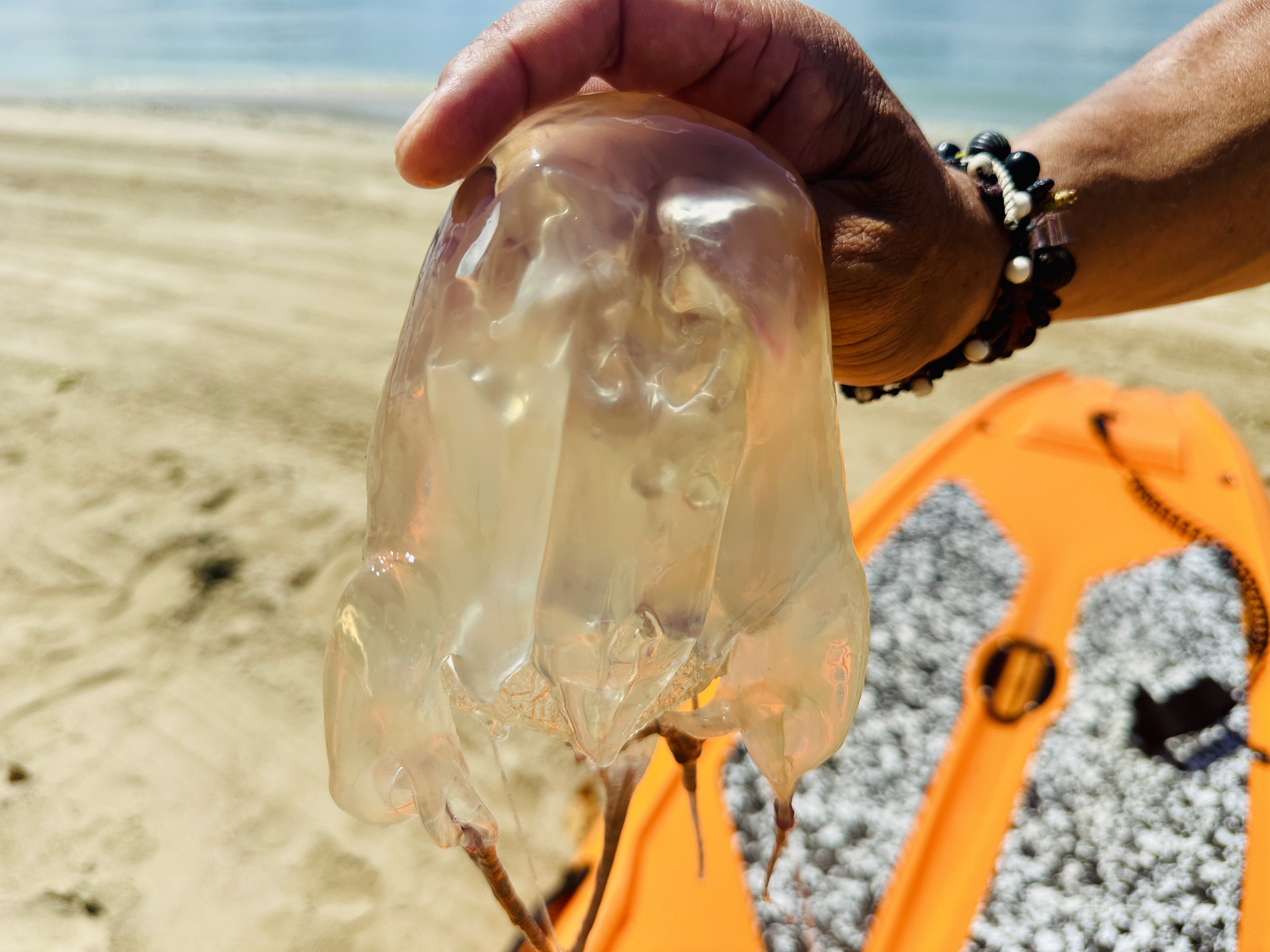
It's not a joke. It left me with gnarly, bloated keloids that permanently scarred my leg. I dragged myself out of the surf, jumped into a tricycle, and told the driver to gun it to the Mercury Drug 20 minutes away in El Nido Town Proper. I bought every antihistamine and steroid cream they had on the shelf.
Hobbling out of that pharmacy with my leg on fire, I actually took a look around Town Proper.
It’s exactly what you expect from a small provincial town in Southeast Asia—crowded, noisy, and pretty dirty compared to anywhere in the West.
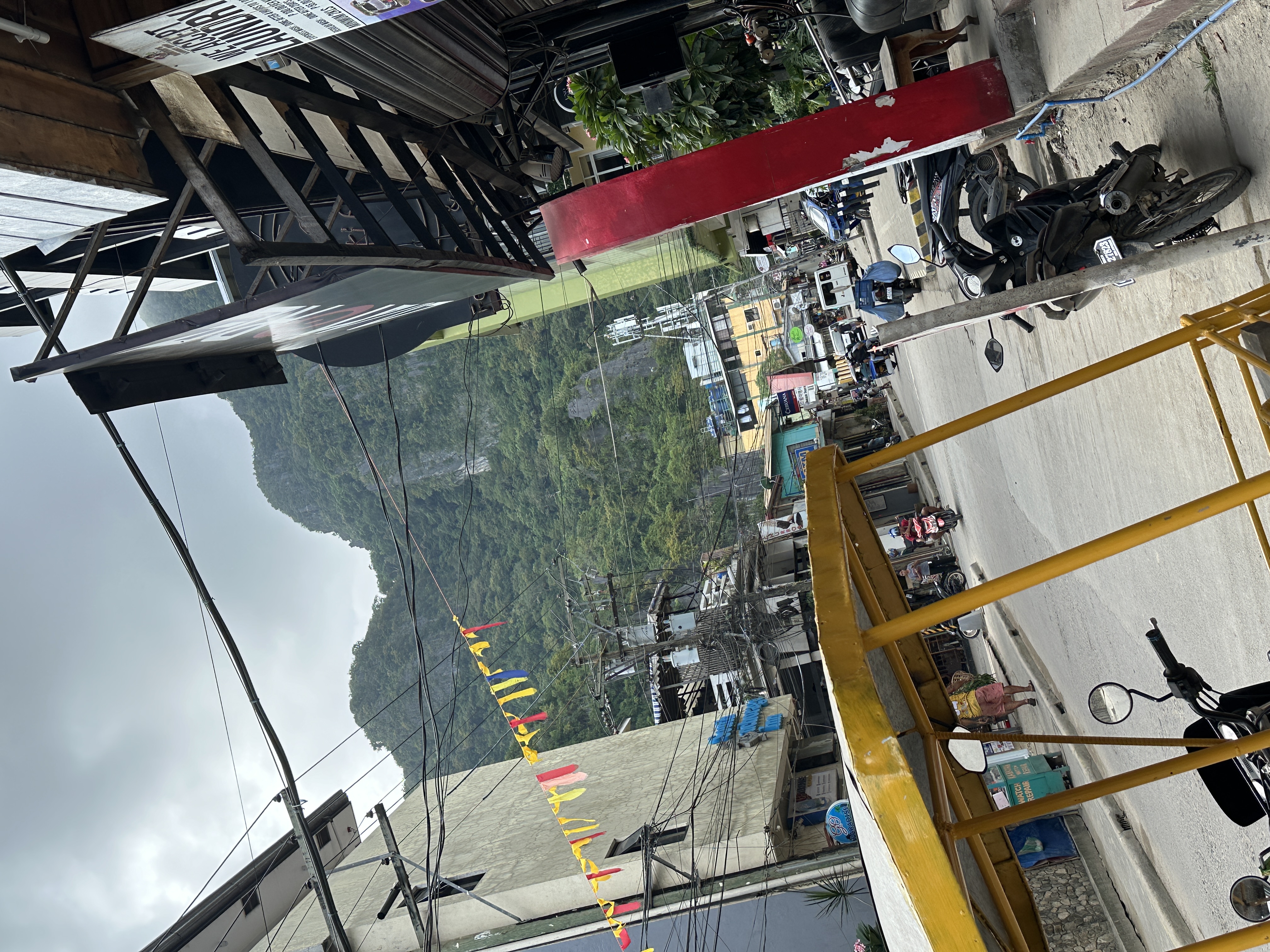
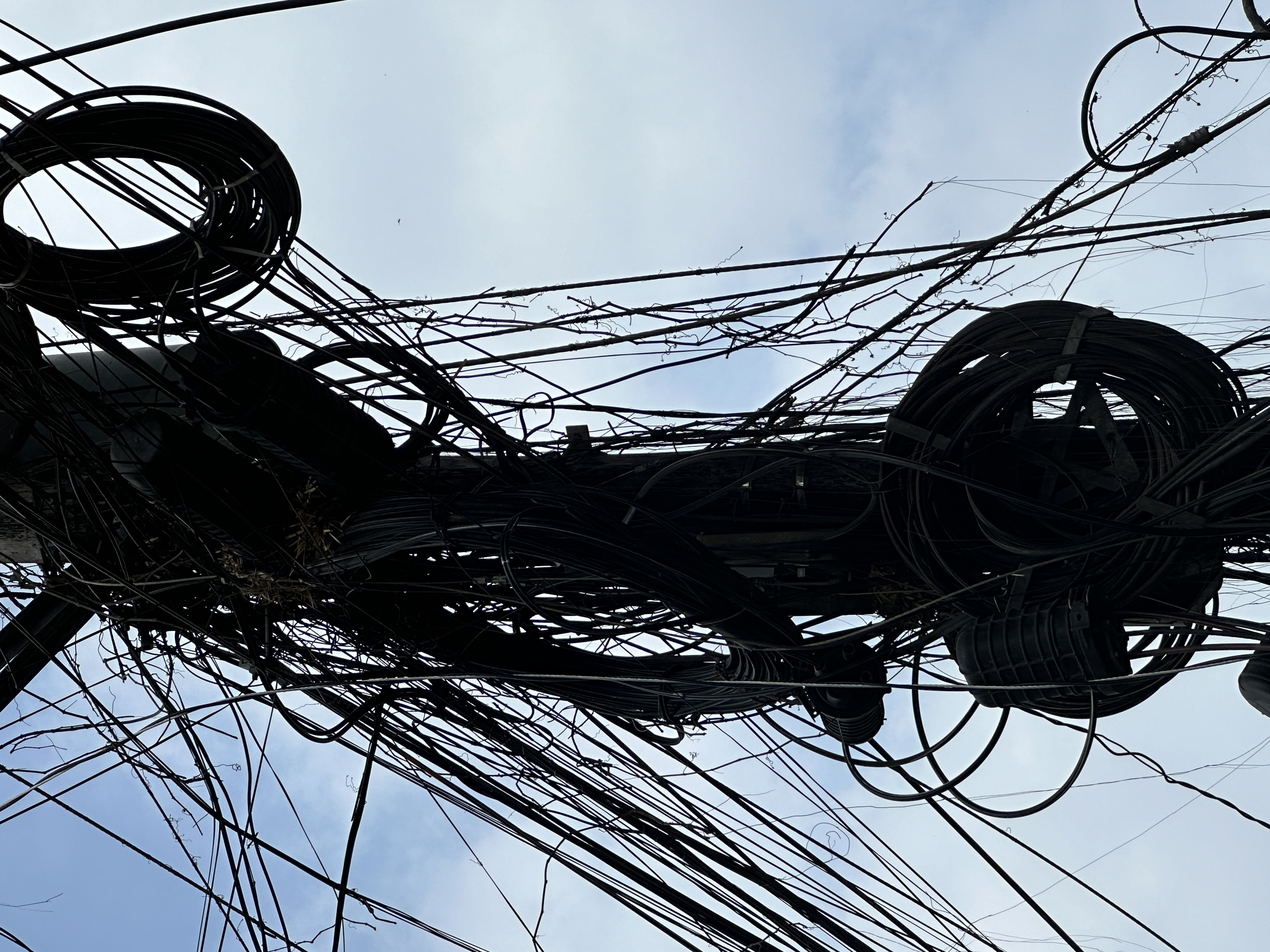
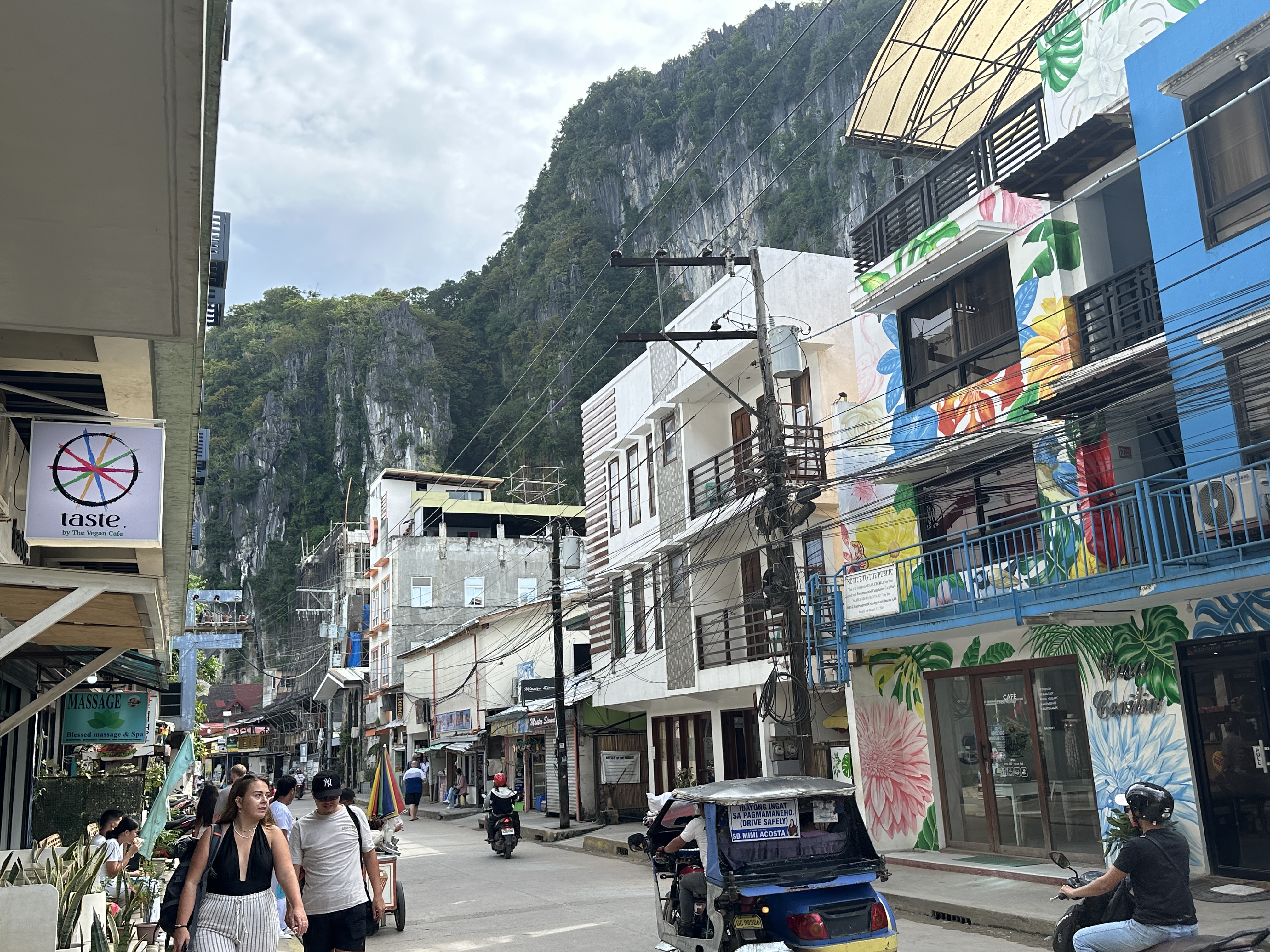
But underneath the exhaust fumes, there’s a distinct shaman-hippy vibe that I hadn't seen anywhere else in the Philippines. It’s essentially a grittier Venice Beach dropped into the jungle. Locals and European long-haulers covered in tattoos. Smoothie bars sandwiched between dive shops. The smell of burning sage and incense cutting through the street dust. You've got your loud backpacker bars if you want them, and low-end spas on every corner.
It’s messy. It’s not the pristine, manicured "hidden paradise" the influencers sell you. It has friction.
But it’s real. I loved it instantly. What started as a short trip turned into living there for six months.
Mapping the Coast
Once my leg stopped burning and I had my bearings, I rented a scooter. You quickly realize that Town Proper is just the anchor—the real day-to-day life for an expat is strung out along the coastal roads.
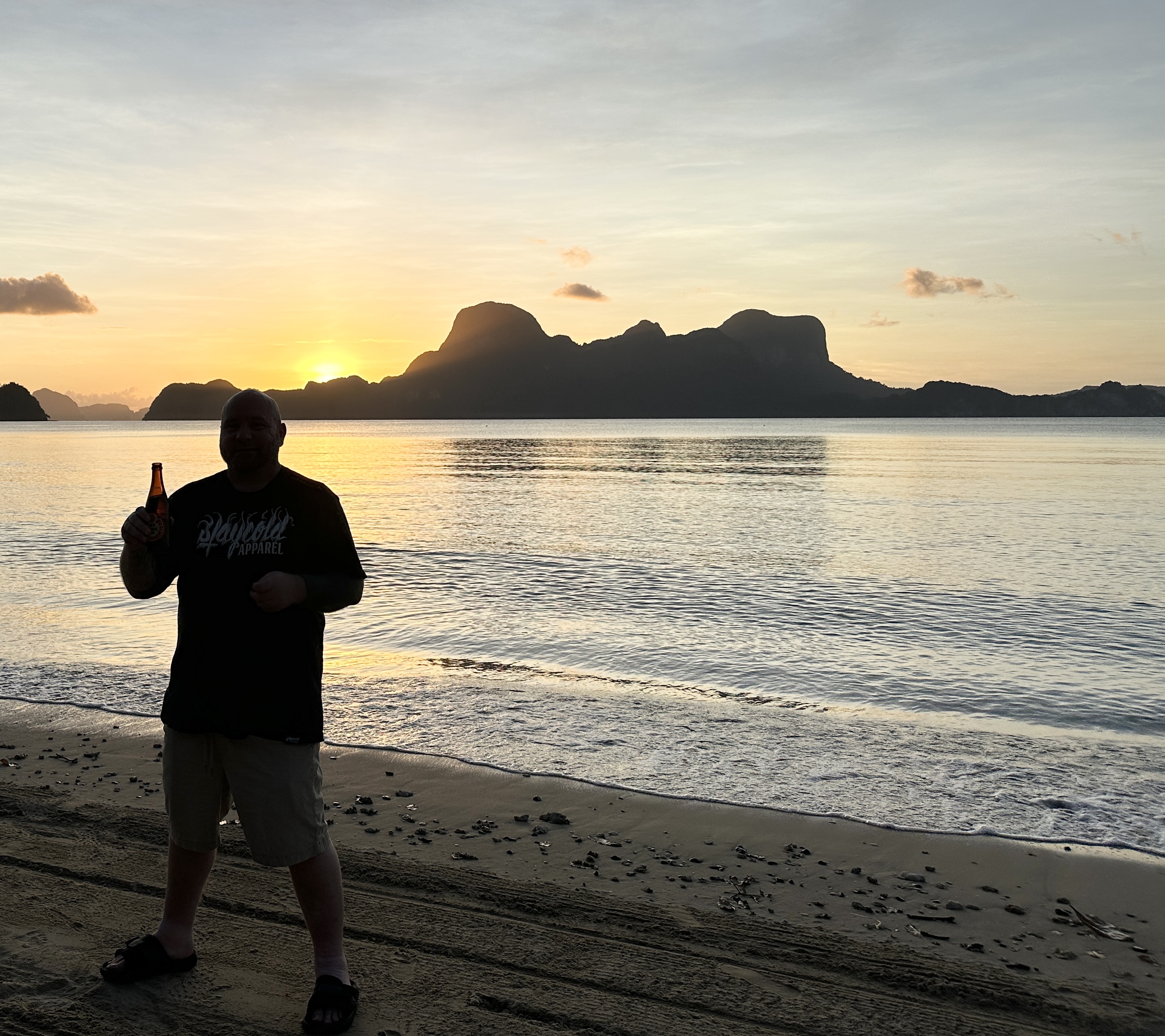
Head south from town and the first place you hit—maybe 7 to 10 minutes out—is Corong Corong.
Here is a geographic reality the brochures skip: El Nido Town Proper is walled in by massive limestone cliffs to the west. This means the town gets dark early and you completely miss the sunset. Corong Corong is the fix. You walk down these sketchy little dirt paths right between local stilt houses, and suddenly you're at beachfront bars watching one of the best sunsets in Palawan.
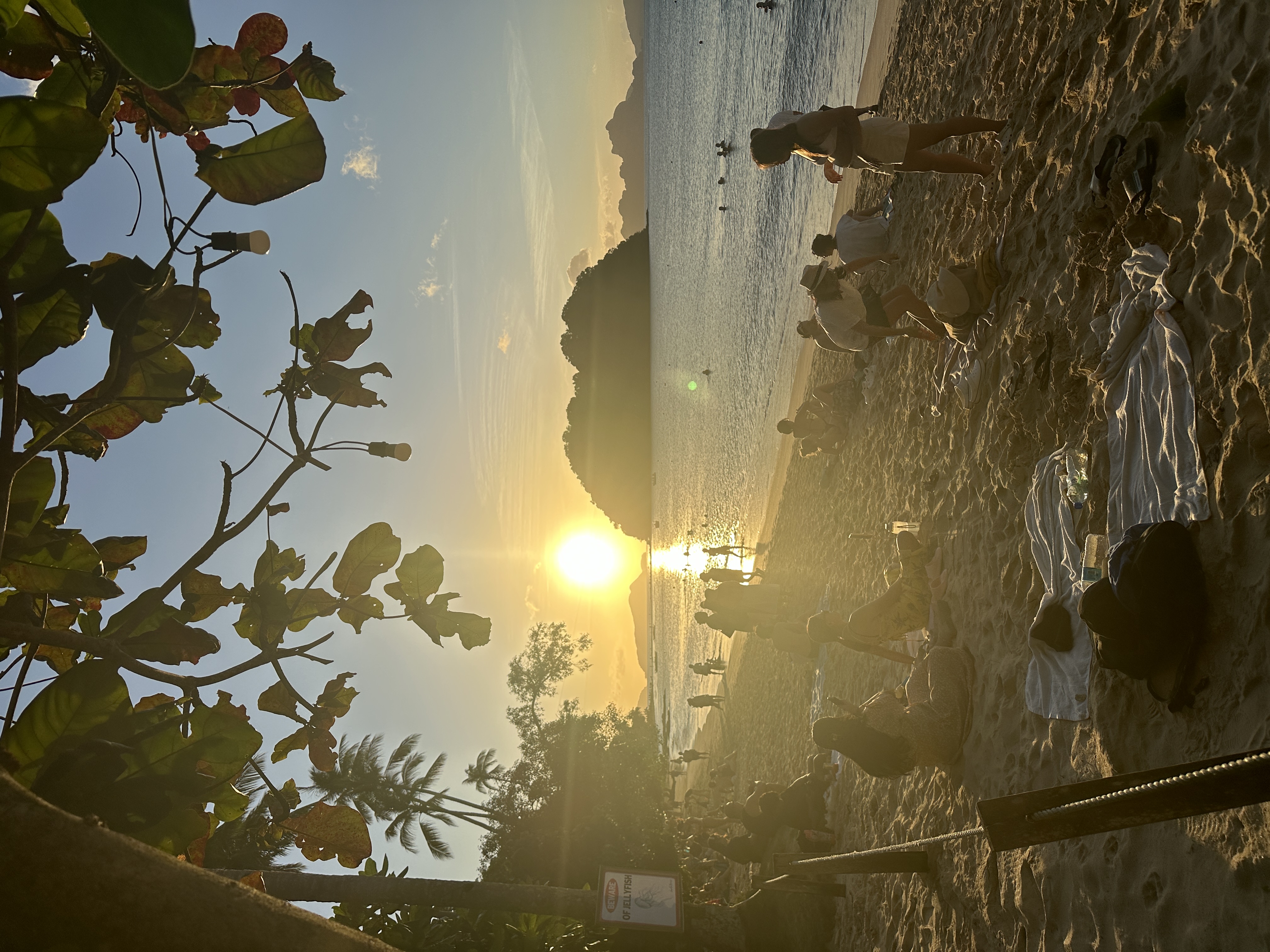
Push another 5 minutes south and you hit Vanilla Beach (blending into Marimegmeg). This is where the money is moving. It feels like a commercialized boutique strip—infinity pools, higher-end beach clubs, and actual paved shopping areas. It’s where you go when you want a break from the grit and are willing to pay Western prices.
Going north is a completely different game. It’s where the infrastructure drops off and the real province starts.
About 45 minutes north by moped, you hit Nacpan Beach. To get there, you're eating dust on a rough road. It’s home to Mad Monkey, which means it’s ground zero for backpackers looking to party. But the beach is so huge that if you just walk ten minutes down the shore, you have the entire ocean to yourself.
Keep pushing past Nacpan, down dirt roads where the dust gets a foot deep in the dry season, and you find Duli Beach. This is the only real surf break in El Nido. There's practically zero development. Board rentals run about ₱500 (~$10) an hour. The local guys are incredibly welcoming, the vibe is strictly surf-focused, and almost no average tourists make it this far up the coast.

Going Local
While I spent days running up and down the coast, Town Proper was where I’d grab lunch, escape the sun, and actually get work done.
I found a spot that doubled as a coffee shop and a tattoo parlor. Being heavily tattooed myself, it was an immediate fit. The AC was blasting, the Wi-Fi actually held up, and the coffee was served cold and aggressively sweet—exactly what you need when it’s 95 degrees with 80% humidity outside.
After about three weeks of setting up my laptop there daily, one of the Filipina baristas finally called me out.
"What are you still doing here?" she asked.
In El Nido, tourists burn out in five days. Two weeks is the absolute maximum before they run out of money or patience. I explained the remote operator setup—I just work from my laptop, clear my tickets, and live in places people usually only visit for a week.
She paused, then told me she had one day off a week. "If you’re up for it, I can show you the actual locals-only spots."
I’m a pragmatist, but I’m not dead. A hot, tattooed Filipina barista was offering to spend her single day off showing me around? Yes. Absolutely yes.
For the next two months, that single day off turned into something real. We spent our time exploring the island, finding quiet beaches, and building a connection with zero tourist bullshit. This was the shift from "expat living in a tourist town" to actually functioning in the local economy.
She showed me how you actually buy food here without paying the 300% foreigner tax. You go to the Wet Market (El Nido Public Market on Rizal St) at 6 AM.
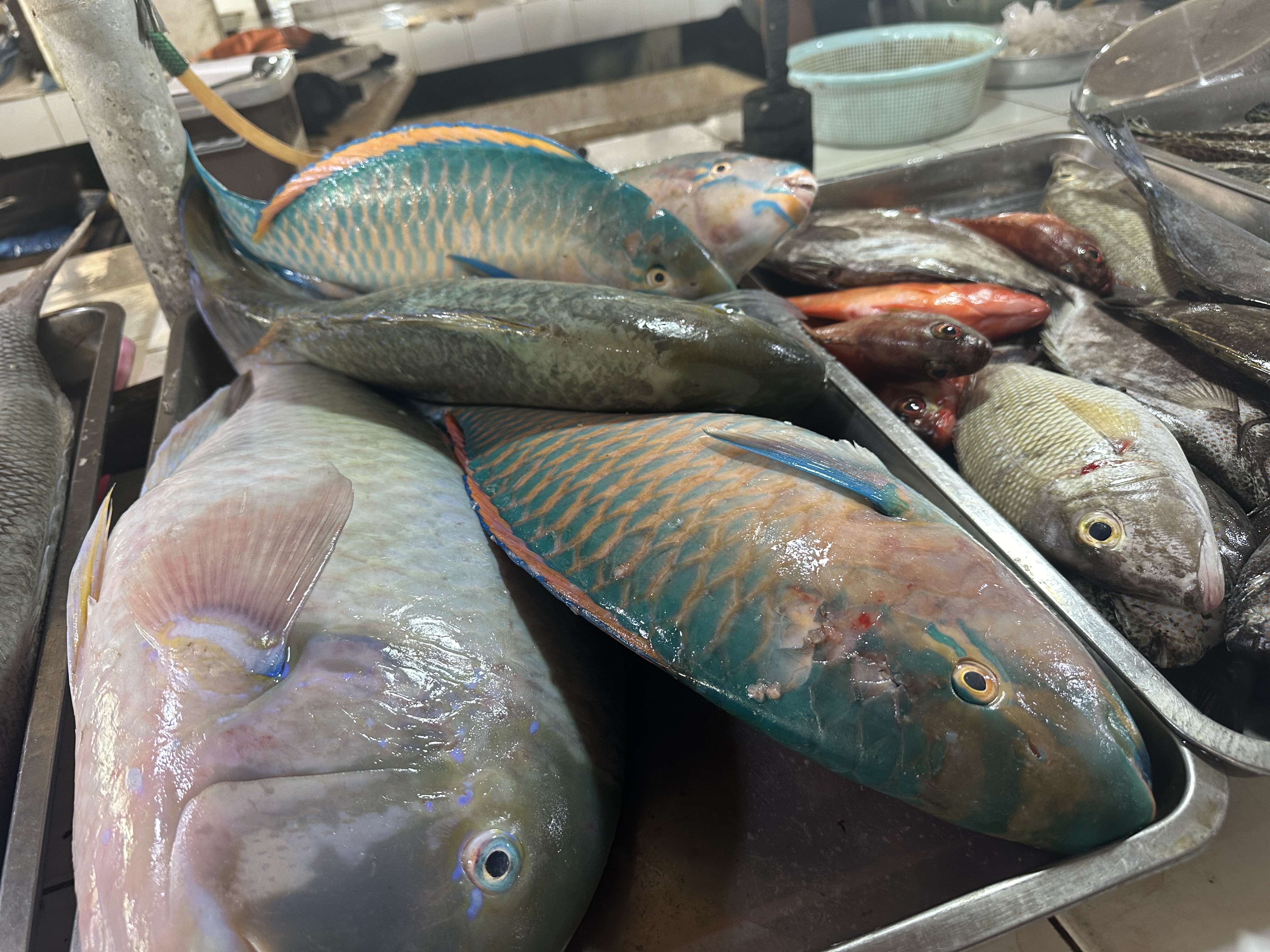

Concrete floors, the smell of raw meat and ocean water. You buy your fresh fish, prawns, and vegetables straight off the tables. If you go alone as a white guy, you get charged 650 PHP for shrimp mixed with the tiny ones. If you go with a local, you get the real cuts at the real price. For everything else, you go to Prince Hypermart. It’s loud, crowded, and perfectly functional.
The Boarding House and the Heavy Lift
The logistics of dating a local eventually hit the reality of provincial Philippine economics.
She was living in a local boarding house. It’s exactly what it sounds like: a concrete room crammed with bunk beds. She shared it with five other people. Zero privacy, one shared bucket-flush bathroom down the hall, electric fans just pushing the hot, humid air around in circles.
It's just what it costs to live and work in the service industry in El Nido.
After a couple of months of bouncing between her crowded boarding house and my cramped Airbnb, I looked at my monthly burn rate and made a call. It was time to stop renting tourist boxes and find an actual house.
The local economy for long-term rentals doesn’t run on online postings. There’s no Zillow. It runs purely on word of mouth. I asked her if she knew of any real places. She sent a few texts. We had a house tour set up within hours, walked the property, and I signed the lease that exact same day. No corporate property management portals. Just cash, an agreement, and a physical key.
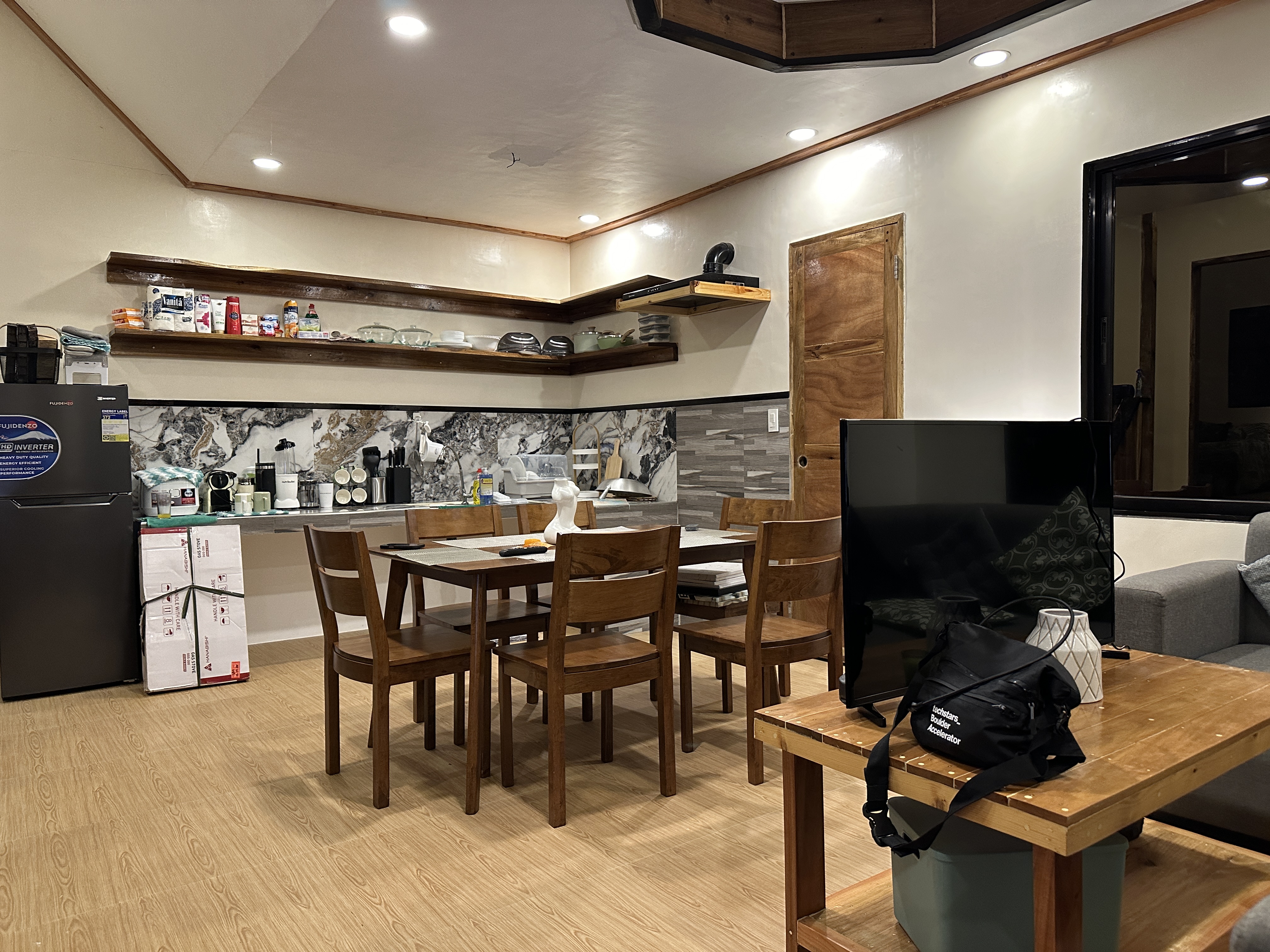
We spent the next two months living together, playing house, and doing all the things new lovers do. We were out of the tourist boxes, out of the crowded boarding house, and finally had our own space. It was that pure honeymoon phase of a new romance—doing the mundane, everyday things that actually make a place feel like a home rather than a transit stop.
Then, two full months into sharing a lease, the honeymoon phase ended, and the real weight of the Philippines dropped on me.
"I have to be honest with you—I have two kids."
They were living in the province with her parents in Taytay, about an hour south. This is normal here, but it was the moment I started to understand the Philippine economy on a structural level. When you are born in a provincial fishing village, there is zero money. You leave your kids with your parents, move to a tourist hub, and funnel the cash back.
Let’s run the actual numbers. She was making about $4 USD a day pulling espresso shots. Of that, $3 went straight back to Taytay to keep four people alive.
It hit me like a load of bricks. In larger cities, you get cynical. You get exhausted being treated like a walking ATM. But looking at the math of a mother grinding out 12-hour shifts to keep her family afloat, the paradigm shifted. I wasn't looking at a scam; I was looking at a brutal survival mechanism.
I raised my son 100% solo for 18 years. I know what the parental grind is.
"We're going to Taytay next week," I told her. "We're grabbing your kids, bringing them back here to the house, taking them on a private boat trip, and spoiling them with pizza and Netflix."
The Groove
We rented a car, drove south, and picked up her boys. We brought them back to the house. They asked if they could stay the week since they were on school break.
Hell yes. Send it.
For the next month and a half, we were in a serious groove. Life was looking up. I had the fiber internet, the local house, and a chaotic, kids on the weekends that cut through the usual expat-tourist transaction. I was pulling night shifts, crushing code, and waking up to the reality of an actual life on the island.
Then, almost six months into my time in El Nido, the real world tapped me on the shoulder.
I got a call from the US. I needed to fly out to Palm Springs for a quarterly planning session for a week. I packed a bag, took the prop plane out of Lio Airport, and stepped out of the Palawan bubble for a week.
The Exit
And that’s when the illusion broke.
When you parachute into a provincial economy where locals are surviving on a few dollars a day, the gravity of that poverty distorts everything. Fidelity is fluid, and that fluidity is hardwired. You think you're building a relationship, but in a system built entirely on survival, you are often just a variable in someone else's economic math.
When you leave the island—even just for a week—the local hustle doesn't pause. It pivots. The transactional nature of a tourist town doesn't care about your good intentions.
It was a hard check on my own pragmatism. I had run the numbers on rent, on internet, on visas. I forgot to run the numbers on human nature in a survival economy.
I came back, packed up the house, closed out the lease, and booked my flight out.
El Nido is beautiful, raw, and entirely unforgiving. Go for the sunsets in Corong Corong. Ride the dusty roads up to Duli Beach. Eat at the wet market. But don't kid yourself about the reality of the ground you're standing on. You can rent the house, but you are always a visitor.
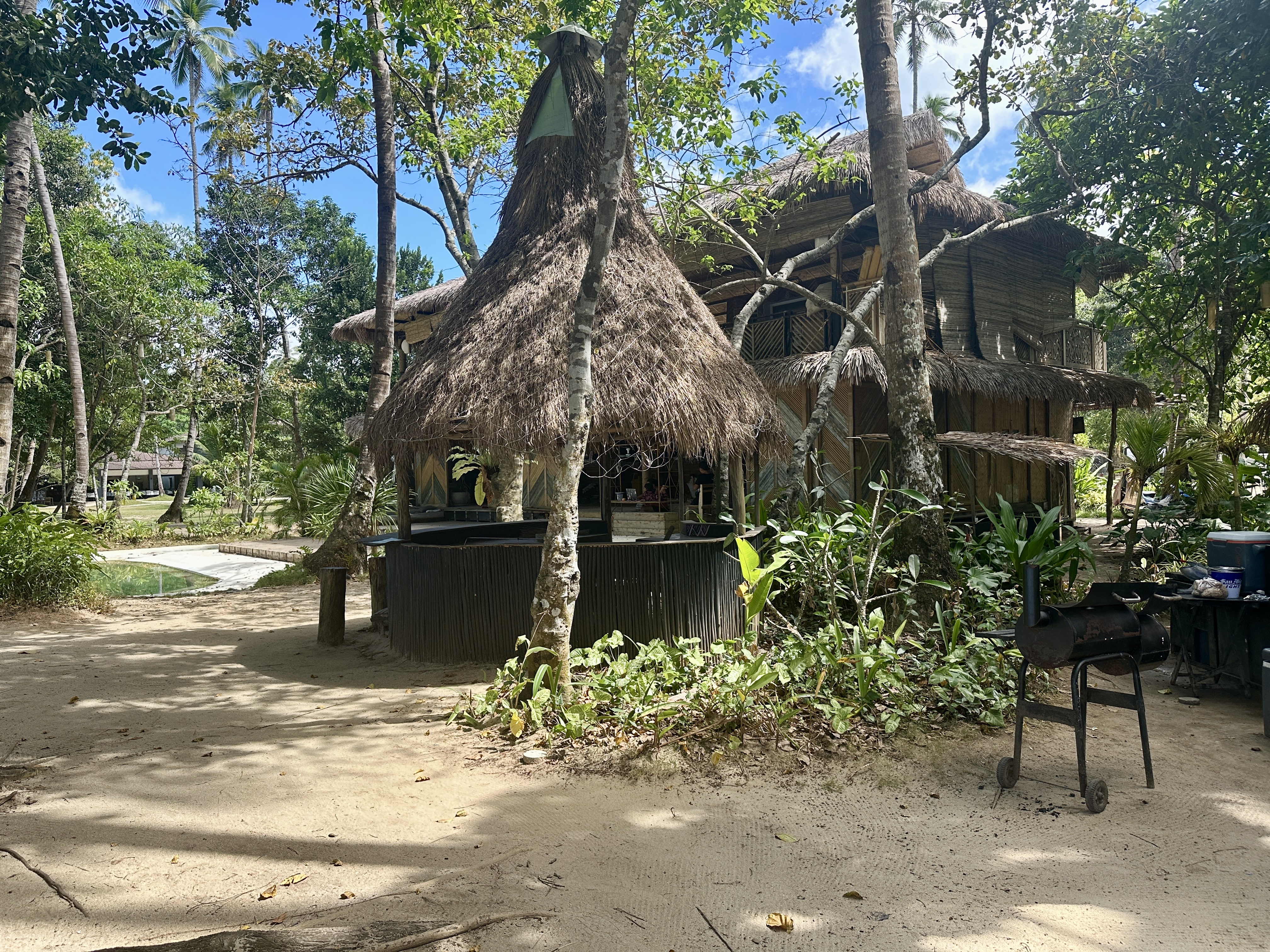
By the Numbers (El Nido Receipts)
Here is what living in El Nido actually costs if you stay out of the resorts and live like an expat operator:
Long-term House Rent: ₱15,000 - ₱25,000 / month (~$260 - $440 USD) for a basic local concrete house. (Airbnbs will easily run you double this).
Scooter Rental: ₱5,000 - ₱7,000 / month (~$90 - $125 USD) if you negotiate a long-term monthly cash rate.
Internet: Starlink is practically mandatory if your job relies on uptime. The local fiber drops constantly. Hardware is upfront, service is ~₱2,700 / month (~$48 USD).
Food (Local): ₱100 - ₱150 per meal at a local carinderia or cooking from the wet market.
Food (Tourist Strip): ₱400 - ₱800+ per meal the second you sit down at a place with English menus and Wi-Fi.
The Hidden Cost: Generator dependency. If your rental doesn't have a backup generator, you will lose days of work to rolling brownouts. Pay the premium for a place that has one.
Patrick
Two years of working remotely and living in the places I write about — long enough to have a regular coffee shop and an opinion about the neighbourhoods.
More from El Nido →